How to Prepare Your Plumbing for Winter: Tips to Avoid Costly Emergencies
Winter can be tough on plumbing. Pipes freeze, leaks get worse, and water heaters work overtime. If you’ve ever woken up to a cold shower or a flooded basement, you know how fast small problems can snowball when temperatures drop.
At Plumbing Xpert, we’ve helped countless homeowners and small business owners weather winter’s worst. With a little preparation, you can avoid the most common emergencies—and the headaches that come with them.
Why Winter Plumbing Preparation Matters ❄️
Winter is like a stress test for your pipes. Freezing temperatures can turn a tiny crack into a burst pipe overnight. Water heaters and sump pumps are pushed to their limits. Even a minor leak can become a major problem when it’s below freezing.
Here’s what’s at stake:
- Frozen pipes: Water expands as it freezes, putting intense pressure on pipes—especially those in unheated areas.
- Leaks: Cold weather can make existing leaks worse, leading to water damage or mold.
- Water heater failures: Increased demand and cold incoming water can cause breakdowns.
- Sump pump overload: Melting snow and ice can overwhelm pumps, risking basement flooding.
A little preparation now can save you from expensive repairs and water damage later. The old saying is true: an ounce of prevention is worth a pound of cure.
Step-by-Step Winter Plumbing Checklist
Ready to winter-proof your plumbing? Here’s a practical checklist to keep your home or business safe and dry.
Pipe Insulation
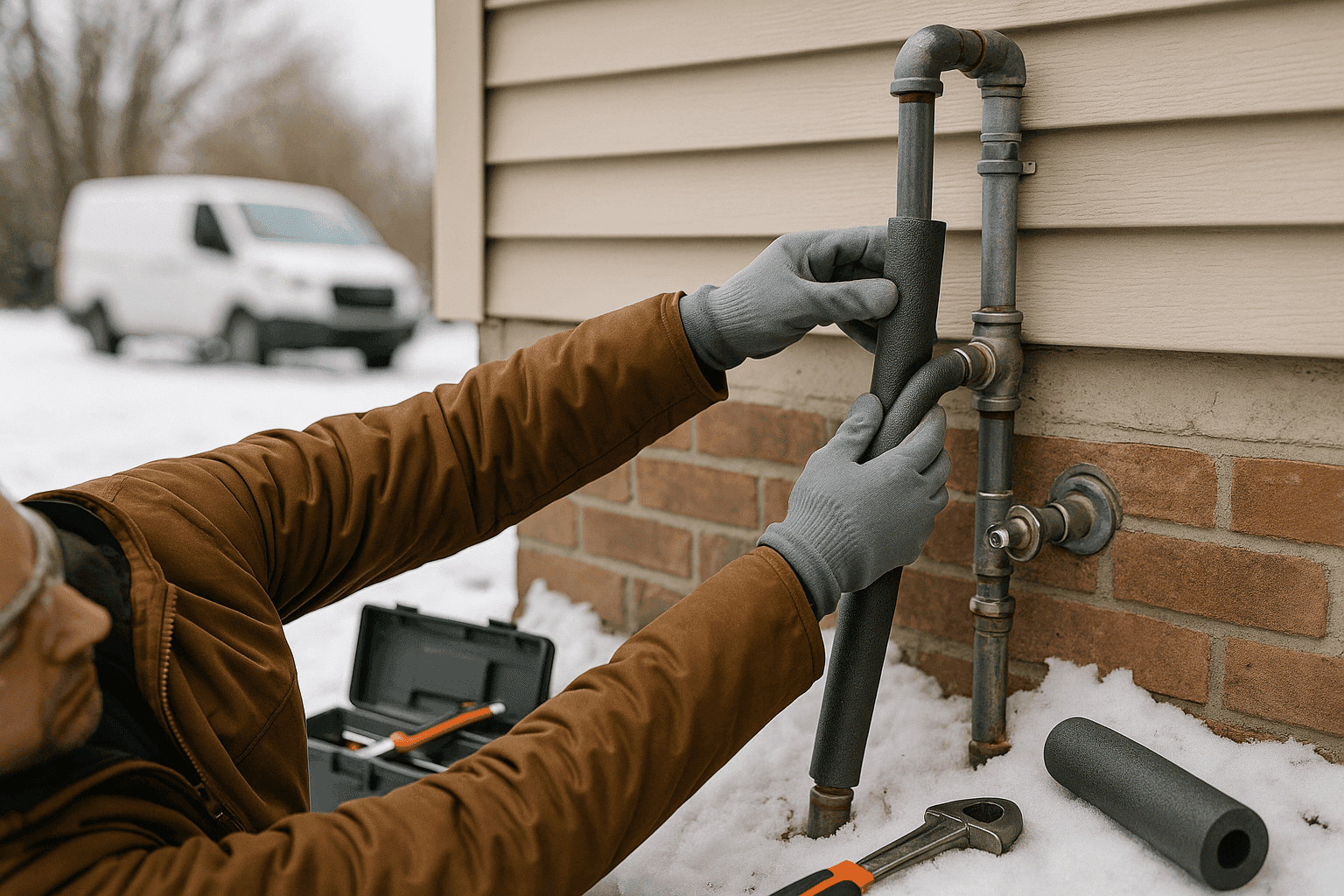
Think of insulation as a warm coat for your pipes. Exposed pipes in basements, crawl spaces, attics, and exterior walls are most at risk.
- Wrap exposed pipes: Use foam pipe insulation sleeves or heat tape. Focus on pipes near exterior walls, unheated garages, and under sinks.
- Seal gaps: Check for drafts where pipes enter walls or floors. Use caulk or spray foam to seal them.
- Outdoor faucets: Disconnect hoses and install insulated faucet covers.
Reference: The International Plumbing Code recommends insulating pipes in unheated spaces to prevent freezing.
Leak Detection
Leaks love to hide until it’s too late. A small drip now can turn into a gusher during a freeze.
- Inspect visible pipes: Look under sinks, behind appliances, and in basements for any signs of moisture or corrosion.
- Check ceilings and walls: Water stains or bubbling paint can be clues.
- Test water pressure: Sudden drops may signal a hidden leak.
If you spot anything suspicious, address it before the cold sets in.
Water Heater Maintenance
Your water heater works harder in winter. Give it a little TLC to avoid cold showers and breakdowns.
- Flush the tank: Sediment can build up and reduce efficiency. Drain a few gallons from the tank to clear out debris.
- Check the temperature: Set it to 120°F to prevent scalding and reduce strain.
- Inspect for leaks: Look for rust, puddles, or strange noises.
Tip: The U.S. Department of Energy recommends annual water heater maintenance for optimal performance.
Sump Pump Checks
A sump pump is your last line of defense against basement flooding. Don’t wait for a storm to find out it’s not working.
- Test the pump: Pour a bucket of water into the pit. The pump should turn on and remove the water quickly.
- Clean the pit: Remove debris that could clog the pump.
- Check the discharge line: Make sure it’s clear and directed away from your foundation.
If your pump is more than 7 years old, consider a backup system.
Emergency Plumbing Tips for Winter
Even with the best prep, emergencies can happen. Here’s what to do if you hit a snag:
- Know your main shut-off valve: Locate it now—before you need it. In an emergency, shutting off water quickly can prevent major damage.
- If a pipe freezes: Turn off the water supply. Open faucets to relieve pressure. Use a hair dryer or heating pad to gently thaw the pipe—never use an open flame.
- If you spot a leak: Place a bucket under the leak, turn off the water, and call for emergency plumbing help.
- No hot water? Check the circuit breaker or pilot light. If unsure, call a professional.
Remember: quick action can make a huge difference in minimizing damage.
When to Call a Professional
Some jobs are best left to the pros—especially in winter. Here’s when to pick up the phone:
- You can’t find the leak: Hidden leaks can cause major structural damage.
- Frozen or burst pipes: Thawing pipes incorrectly can cause more harm than good.
- No hot water: Water heater repairs can be dangerous without proper training.
- Sewer backups or flooding: These require specialized tools and expertise.
Plumbing Xpert offers 24/7 emergency plumbing services. Our licensed technicians are ready to help, day or night.
Frequently Asked Questions
How can I tell if my pipes are at risk of freezing?
Pipes in unheated spaces or against exterior walls are most vulnerable. If you notice reduced water flow on cold days, a pipe may be starting to freeze.
What’s the best way to insulate pipes?
Foam pipe sleeves are easy to install and effective. For added protection, use heat tape on pipes that have frozen before.
Is it safe to use antifreeze in plumbing?
Never use automotive antifreeze in your home’s plumbing. Only use products labeled safe for potable water systems, and only in drains that won’t be used during winter (like outdoor kitchens).
How often should I check my sump pump?
Test your sump pump at least twice a year—before the first freeze and again in the spring.
Special Considerations for Businesses
If you own a small business, winter plumbing prep is just as important. Frozen pipes can shut down operations and damage inventory. Schedule regular maintenance, especially if your building has older plumbing or is closed for periods during winter. Install leak detectors and smart thermostats for added peace of mind.
Tip: The Occupational Safety and Health Administration (OSHA) recommends regular checks for water leaks and proper insulation in commercial buildings.
Winter doesn’t have to mean plumbing disasters. Take action now, and you’ll thank yourself when the coldest days arrive. If you run into trouble—or just want peace of mind—Plumbing Xpert is here for you.
Call Plumbing Xpert now — or reach us anytime at 877-657-7699 .